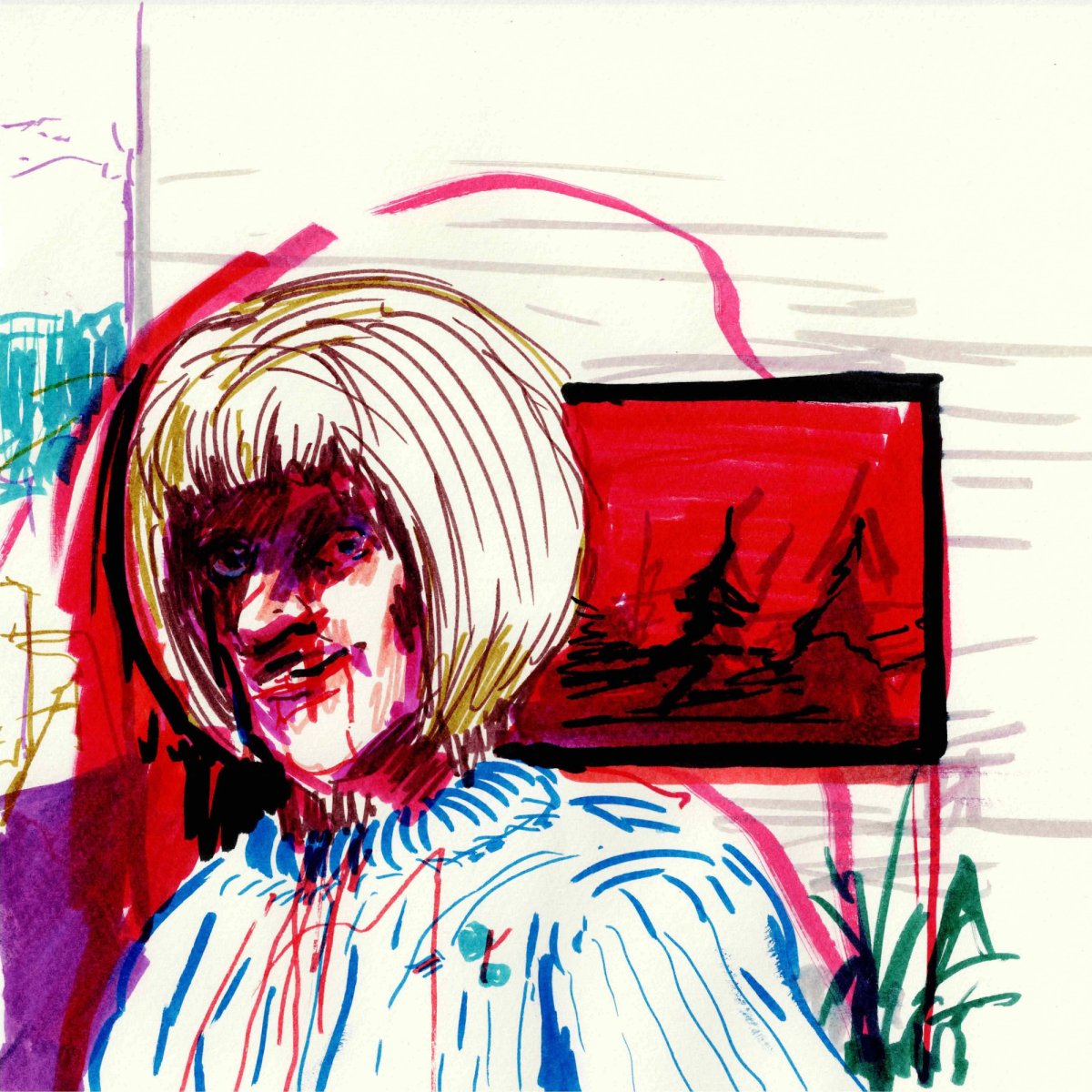
Cave Inscriptions: Inscription I

Exhibition: Cave Inscriptions: Inscription I

📅: June 1 – August 14, 2026
🕚: Monday – Friday, 11:00 am – 6:00 pm
📍: Lobby
🎟: Free admission
Taller para formación de archivos en El Castillo de Chapultepec: 01

Workshop: Taller para formación de archivos en El Castillo de Chapultepec: 01

📅: June 5 – August 14, 2026
🕒: Friday, 3:00 pm – 7:00 pm
📍: El Castillo de Chapultepec
🎟: Free admission

Coordinator: Paulina González Villaseñor
Participants: Newton

Ñaka Ñaka

Concert: Ñaka Ñaka

📅: August 13, 2026
🕖: Thursday, 7:00 pm
📍: Lobby
🎟: Free admission
SOUVENIRS

History

Since 2012, one of the research lines of the architecture office APRDELESP has centered on its own workplace, using it as a laboratory for research and spatial experimentation. This process initially resulted in a network of subspaces that functioned, starting in 2012, as a public extension of their office: a pavilion, a lobby-bar, an art gallery, an experimental park, an online radio station, an empalme stall, a café and furniture shop, two convenience stores, and multiple cafés. Later, this research led to El Castillo de Chapultepec, the first mansion-studio in the world, an architectural typology in development that encompasses a deeper questioning of cultural infrastructures.

In 2015 APRDELESP began using one of the studios in the building located at Agustín Melgar 731 as their office, and the renovation process was initiated while some areas continued to be used as studios, residences, storage rooms, offices, and galleries.

In 2017 the banquet hall was emptied and reactivated as a studio for artist Pia Camil and, later, for artist PJ Rountree until 2021. From 2017 to 2019 Pia and PJ organized La Noche del Cisne. In 2020 PJ organized SET and, together with Kenny Curran, the third edition of BABA. In 2021 it hosted La subasta de arte por Pame. In 2022 it hosted the XV death anniversary of Juan José Gurrola and the book launch of asolar, the final poetry collection published by bruno darío. In 2023 it hosted a broadcast of Montez Press Radio and the concert E.M.P., organized by Jerónimo Jiménez. In 2024 it hosted the DAC puppet theater workshop organized by Katia Tirado, Jan Machacek, Edwarda and Rosa Gurrola.

Between 2018 and 2020, some of the apartments were occupied by NAAFI's studio, the studios of Jerónimo Rüedi and Santi Marín, and the gallery LADRÓN; during this period, the lobby-bar La Pipí opened intermittently in a storage room on the ground floor.

Starting in 2024, more and more events related to the project began to be programmed, such as The Annual Auction of El Castillo de Chapultepec and the workshop Taller de archivos para colectivos de arte: Intemperie I, with the goal of continuing the renovation process and gradually opening all of its areas:

- The lobby of El Castillo de Chapultepec was inaugurated by Newton on February 3, 2025.

- Macolen began operating as El Castillo de Chapultepec printing press starting in February 2025.

- The Aeromoto Garden was inaugurated by Diego Pérez, Jerónimo Rüedi, Macarena Hernández, Maru Calva and Mauricio Marcin on August 7, 2025.

- La fábrica de fantasmas, the archive of El Castillo de Chapultepec, was publicly announced on August 24, 2026.

El Castillo de Chapultepec, located in the 5th Section of Chapultepec Park in Mexico City, is a nonprofit cultural project in development managed by the architecture office APRDELESP: a superlocal site of artistic, economic, spatial, political, and social research and experimentation driven by the desire to imagine collective alternatives built from the memory and labor of active agents related to the local artistic community.2 The experiment begins with the design of the administration and governance of the project, along with the architecture of the building in which it is located, to explore different ways of using and distributing resources (space, time, money, et cetera) as well as the cultural infrastructures that host our dialogues, critiques, thoughts, differences, interests, et cetera. 3
1.

In 1943, José Crespo Pastor commissioned civil engineer Jacinto Álvarez y S. the design and the construction of the Spanish restaurant and banquet hall El Cisne and nine apartments on the property located at 596 Avenida Chapultepec.

In 1948, María Luisa Álvarez inherited the property from her husband José Crespo Pastor.

During the forties and fifties, El Cisne was frequented by figures such as Salvador Novo and Octavio Paz; hosted meetings of the group Los Contemporáneos formed by José Gorostiza, Carlos Pellicer, Bernardo Ortiz de Montellano, Enrique González Rojo and Jaime Torres Bodet; hosted the first communion of Rocío and Rosa María Vivanco Rodríguez (Rosa Gurrola a.k.a Newton); et cetera.

In 1961, María Luisa divided the property in two and sold to Otto Spritz Lowy exclusively the part that is currently located at 73 Agustín Melgar, which contains the banquet hall on the ground floor and the apartments on the upper levels.

In 1964, Willy Otto Herman Wenck Miller bought the property. He used the banquet hall as his residence and the rest of the building as furnished apartments for rent until his death, fatally struck by a microbus (then known as Delfines) on the Circuito Interior Maestro José Vasconcelos, in 1980.

Subsequently, after the property passed by inheritance to Laura Wenck Miller (Willy's only daughter), they continued renting the apartments and after partial abandonment of approximately 35 years, Guillermo Francisco Javier González Wenck (one of Laura's sons) used it as storage and office until his death in 2014.

In 2015, the property passed to the heirs of Guillermo Francisco Javier González Wenck: Tere Ceballos Pallares (wife), María and Guillermo González Ceballos (children).

From this moment, on the initiative of APRDELESP –of which Guillermo is a partner–, work began on El Castillo de Chapultepec.

2.

We use the term 'local artistic community' to refer to an expansive, variable, and constantly transforming group related to artistic practice and Mexico City. We have no interest in limiting or defining it further. On the contrary, we conceive of it as a group of people, collectives, projects, institutions, et cetera, involved in different ways with art, Mexico City and, in this case, with El Castillo de Chapultepec, including the problems, egos, wills, differences, interests, et cetera, of each of the parties. We are not interested in a more specific type of grouping (neither emerging nor consolidated, neither living nor dead, et cetera), other than that of a diverse model in which more and more agents can continue to be added.

3.

Because contemporary art is subject to established institutional dynamics, its liberation depends on modifying them. Changes in relations of production demand a shift in consciousness, which in turn requires different institutions.

📬 Sign up to the newsletter of El Castillo de Chapultepec
El Castillo de Chapultepec